
As seniors age, maintaining independence while ensuring safety becomes increasingly important. Creating a secure living environment allows older adults to live confidently and reduces the risk of accidents. Implementing senior home safety measures is essential for protecting health, preventing injuries, and promoting peace of mind for both seniors and their families.
Understanding the Importance of Home Safety for Seniors
A home that is not adapted to the needs of older adults can pose numerous hazards. Common risks include:
- Slippery floors that increase the likelihood of falls.
- Poor lighting that makes navigation difficult.
- Cluttered walkways that obstruct movement.
- Difficult-to-reach storage areas that cause strain or injury.
Awareness of these risks is the first step in creating a secure and comfortable living space.
Essential Home Safety Tips for Elderly
Implementing practical strategies can significantly enhance safety for seniors living alone. Here are key home safety tips for elderly:
- Maintain clear pathways: Remove loose rugs, cords, and clutter to prevent trips.
- Improve lighting: Use bright, non-glare lighting in hallways, staircases, and entrances.
- Secure bathroom areas: Install non-slip mats, grab bars, and shower chairs.
- Monitor temperature: Ensure easy access to thermostats and maintain a comfortable indoor climate.
Simple modifications can greatly reduce hazards and improve daily living.
Safety Devices for Elderly
Integrating safety devices for elderly helps prevent accidents and provides quick access to assistance when needed. Essential devices include:
- Medical alert systems: Allow seniors to call for help in emergencies.
- Motion-sensor lighting: Illuminates pathways at night to prevent falls.
- Smart home devices: Sensors for smoke, carbon monoxide, or water leaks improve safety.
- Door and window alarms: Enhance security while maintaining independence.
Using these devices enhances confidence and reduces anxiety for seniors living alone.
Fall Prevention Home Modifications
Falls are one of the most common causes of injury among older adults. Implementing fall prevention home modifications can dramatically reduce risks:
- Install handrails: Secure railings on stairs and in bathrooms provide essential support.
- Non-slip flooring: Use materials that reduce slipping in kitchens, bathrooms, and entryways.
- Step-free entryways: Minimize tripping hazards at doors and thresholds.
- Furniture arrangement: Keep frequently used items within easy reach to avoid climbing or bending.
These modifications not only prevent accidents but also support independence and mobility.
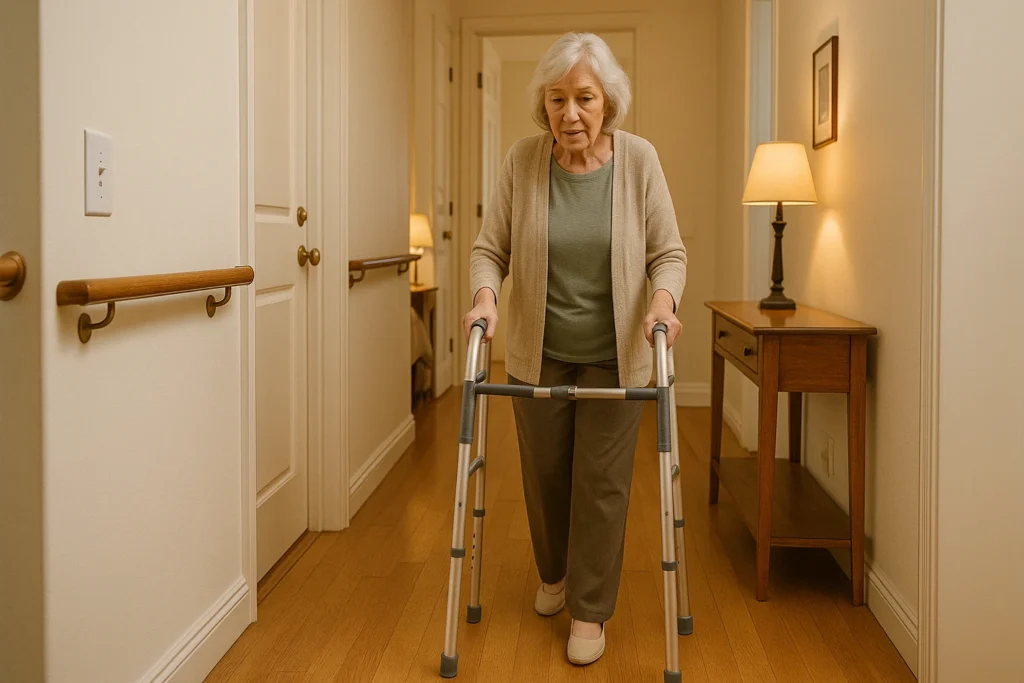
Creating a Home Safety for Seniors Checklist
A comprehensive home safety for seniors checklist can help families systematically evaluate and improve the environment. Consider including:
- Living room: Clear walkways, secure cords, stable furniture.
- Kitchen: Store heavy items at waist height, use non-slip mats.
- Bathroom: Grab bars, shower chair, anti-slip mats, adequate lighting.
- Bedrooms: Night lights, clear paths to bathroom, sturdy bed frame.
- Stairs and hallways: Handrails on both sides, bright lighting, remove obstacles.
- General: Smoke detectors, carbon monoxide detectors, emergency contacts accessible.
Using a checklist ensures no areas are overlooked and promotes consistent safety practices.
Tips for Maintaining Safety Daily
Beyond modifications and devices, daily routines play a significant role in maintaining a secure environment:
- Regular inspections: Check for wear and tear on flooring, handrails, and devices.
- Routine organization: Keep items consistently in the same location to reduce confusion.
- Encourage safe habits: Remind seniors to use mobility aids, wear non-slip footwear, and avoid rushing.
- Stay connected: Frequent check-ins from family or caregivers ensure quick assistance if needed.
Integrating these habits enhances overall safety and contributes to a worry-free living environment.
Supporting Independence While Ensuring Safety
Safety measures do not have to compromise independence. Strategies to balance autonomy with protection include:
- Smart home technology: Automated lights, voice-activated devices, and emergency alert systems allow independent living.
- Adaptive furniture: Chairs with armrests, beds at proper heights, and easy-access storage support daily activities.
- Routine planning: Structured schedules for meals, medications, and activities reduce confusion and accidents.
- Professional support: Home care services can provide periodic assistance, safety assessments, and guidance on best practices.
By blending independence with practical precautions, seniors can enjoy a safe and fulfilling lifestyle.
Involving Family and Caregivers
Family members and caregivers play a vital role in maintaining a secure home environment. Effective approaches include:
- Conduct home safety assessments together: Identify potential hazards collaboratively.
- Assist with modifications: Help install devices, rearrange furniture, and secure loose items.
- Provide education: Teach seniors how to use safety devices and encourage adherence to routines.
- Offer emotional support: Ensure seniors feel empowered, not restricted, by safety measures.
Collaboration strengthens safety practices while preserving dignity and confidence.
Conclusion
Creating a secure home for seniors living alone requires a combination of practical modifications, safety devices, and mindful routines. By addressing fall hazards, enhancing accessibility, and integrating supportive technologies, families can foster independence while reducing the risk of accidents. Thoughtful planning and proactive care create a home environment that promotes well-being, confidence, and peace of mind for older adults.