
As people age, maintaining mental sharpness and emotional well-being becomes increasingly important. Engaging in social activities for seniors is a proven way to support brain function, reduce feelings of loneliness, and enhance overall quality of life. These interactions not only provide enjoyment but also contribute to cognitive health in elderly individuals, helping preserve memory and mental agility over time.
Understanding Cognitive Decline and Its Risks
Cognitive decline can manifest as memory lapses, difficulty focusing, or reduced problem-solving ability. While aging naturally affects the brain, there are strategies to slow this process and maintain mental vitality:
- Engagement: Regular participation in mentally stimulating tasks strengthens neural connections.
- Social interaction: Conversations, group activities, and shared experiences challenge the brain in unique ways.
- Physical activity: Movement improves blood flow to the brain, supporting cognitive function.
Combining these approaches creates a holistic strategy to maintain independence and mental clarity.
Benefits of Social Activities for Seniors
Participation in social engagements offers both cognitive and emotional advantages. Research consistently shows that older adults who remain socially active experience:
- Enhanced memory retention: Sharing experiences and participating in group discussions stimulate memory recall.
- Reduced risk of dementia: Consistent social engagement may delay the onset of cognitive impairment.
- Improved mood: Positive interactions alleviate feelings of isolation and depression.
- Increased longevity: Mentally and socially active seniors often experience better overall health outcomes.
Creating opportunities for meaningful interaction is key to unlocking these benefits.
Types of Activities to Prevent Memory Loss
Tailoring activities to an individual’s abilities and interests can make participation enjoyable while promoting brain health. Consider these activities to prevent memory loss:
- Group discussions or book clubs: Encourage conversation, critical thinking, and memory recall.
- Board games and card games: Challenge strategic thinking and problem-solving skills.
- Creative hobbies: Art, music, or crafts stimulate different areas of the brain and foster emotional expression.
- Storytelling sessions: Recalling personal experiences exercises memory retrieval and verbal skills.
These activities combine social connection with mental stimulation, creating a dual benefit for seniors.
Brain Exercises for Seniors
Regular mental exercises are essential for maintaining cognitive function. Incorporating brain exercises for seniors into daily routines can include:
- Puzzles and crosswords: Boost problem-solving skills and concentration.
- Memory games: Match images, names, or numbers to enhance recall.
- Learning new skills: Taking up a new language or hobby keeps the brain engaged and adaptable.
- Technology-based programs: Apps designed for cognitive training provide interactive mental challenges.
Consistency is key—short, frequent sessions are more effective than occasional intensive exercises.
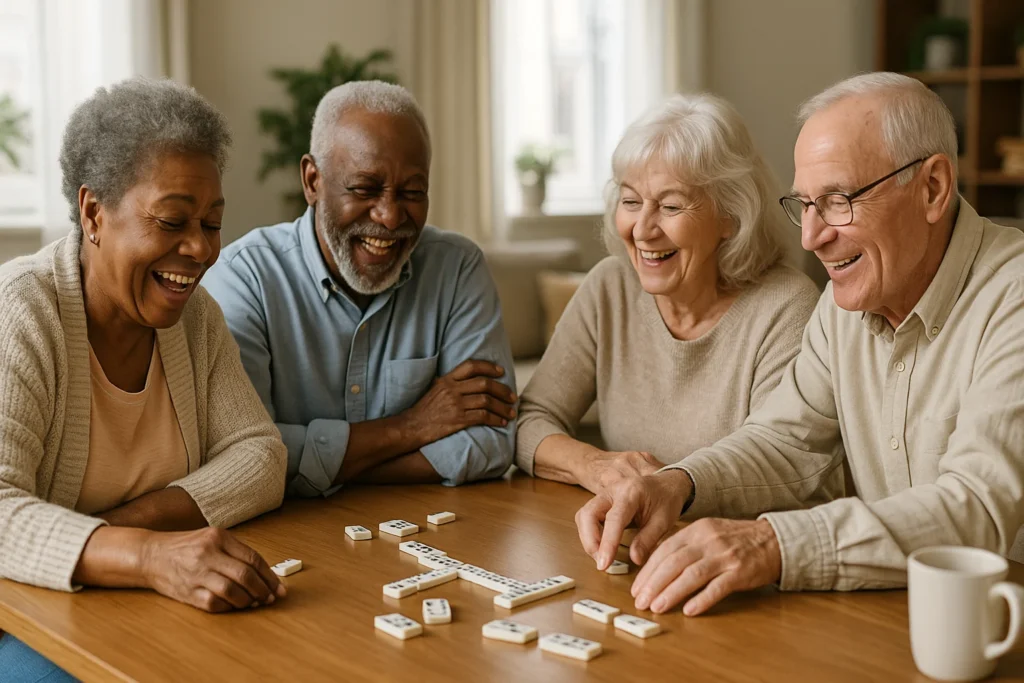
Encouraging Social Engagement for Older Adults
Socialization not only stimulates the mind but also strengthens emotional well-being. Strategies to promote social engagement for older adults include:
- Community centers: Participation in classes, clubs, or group events fosters connection.
- Volunteer opportunities: Helping others provides a sense of purpose and meaningful interaction.
- Family involvement: Regular visits, calls, or video chats maintain bonds and reduce isolation.
- Senior activity groups: Exercise classes, gardening clubs, or hobby-based groups encourage camaraderie.
Tailoring engagement opportunities to personal preferences ensures higher participation and satisfaction.
Mental Stimulation for Seniors at Home
Even for seniors who spend more time at home, mental stimulation for seniors can be achieved with creative strategies:
- Interactive games: Simple quizzes, trivia, or memory challenges engage the mind.
- Music and movement: Dancing, singing, or playing instruments stimulates both cognitive and motor skills.
- Reading and discussion: Books, newspapers, or articles spark conversation and reflection.
- Technology use: Video calls, online classes, and virtual games offer cognitive challenges and social connection.
Integrating these activities into daily routines promotes continuous mental engagement and supports overall brain health.
Tips for Caregivers to Enhance Cognitive Engagement
Caregivers play a critical role in facilitating meaningful activities. Effective strategies include:
- Plan structured schedules: Incorporate consistent times for social and mental activities.
- Adapt to abilities: Modify tasks based on cognitive and physical capacities.
- Encourage participation, not pressure: Allow seniors to choose activities they enjoy.
- Celebrate achievements: Positive reinforcement boosts confidence and motivation.
By creating an environment that encourages interaction and learning, caregivers help seniors remain active, connected, and fulfilled.
Practical Ideas for Daily Integration
Incorporating social and cognitive activities into everyday life can be simple yet impactful:
- Morning group exercises: Combine light movement with conversation.
- Shared meal preparation: Cooking together engages memory, coordination, and social interaction.
- Afternoon hobbies: Dedicate time for art, music, or craft activities with friends or family.
- Evening reflection: Storytelling, reading aloud, or discussing the day reinforces memory and communication skills.
Consistency and variety make participation enjoyable and prevent monotony.
Conclusion
Maintaining cognitive health and emotional well-being in seniors requires more than medical care—it relies on meaningful interaction, engaging activities, and mental stimulation. Social involvement combined with brain exercises supports memory, reduces isolation, and enriches daily life. By fostering opportunities for connection and mental engagement, caregivers and families can help older adults thrive, creating a fulfilling, vibrant lifestyle that promotes longevity and happiness.