
As we age, maintaining balance and strength becomes increasingly important to prevent falls. Falls are a leading cause of injury among older adults, but the good news is that there are effective ways to reduce the risk. This guide will explore how to improve balance in the elderly, provide practical balance exercises for seniors at home, and offer senior fall prevention tips.
Understanding the Importance of Balance
Before diving into exercises, let’s understand why balance is crucial for seniors. Good balance helps prevent falls, which can lead to serious injuries such as fractures or head trauma. Strong muscles and good balance can also improve overall mobility and independence.
Why Do Seniors Experience Balance Issues?
Several factors contribute to balance issues in the elderly:
- Muscle Weakness: As we age, muscle mass tends to decrease, leading to weaker support for the body.
- Joint Stiffness: Aging can cause joints to become less flexible, affecting balance.
- Vision Changes: Poor vision can make it difficult to perceive the environment, increasing fall risk.
- Medications: Some medications have side effects like dizziness, affecting balance.
Understanding these factors can help address specific areas through exercises and lifestyle changes.
Balance Training for Seniors: Exercises to Prevent Falls
Incorporating regular balance exercises can significantly reduce the risk of falls. Here are some easy exercises that seniors can do at home.
Simple Balance Exercises
- Heel-to-Toe Walk: Stand up straight.Place one foot directly in front of the other so that the heel of one foot touches the toes of the other. Walk forward slowly for about 10 steps. This exercise improves balance by strengthening the muscles used for walking and standing.
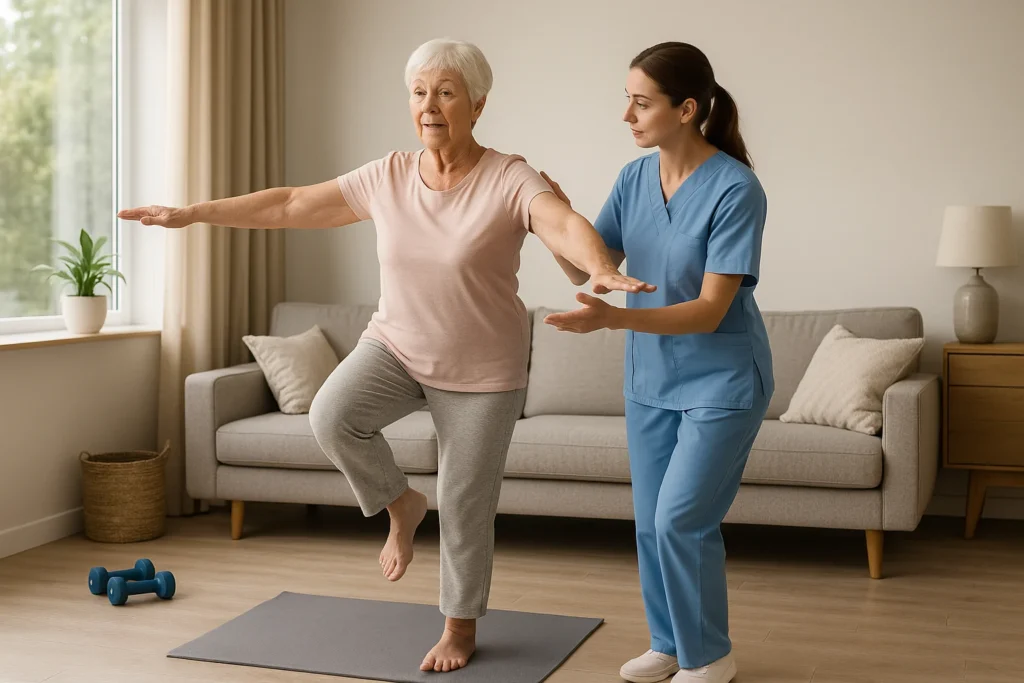
- Single-Leg Stand: Stand behind a sturdy chair and hold on for support.Lift one leg off the ground and hold the position for 10 seconds.Repeat with the other leg. This exercise helps improve balance and leg strength.
- Back Leg Raises: Stand behind a chair for support.Slowly lift one leg straight back without bending the knee.Hold for a few seconds, then lower the leg.Repeat with the other leg. This strengthens the lower back and buttocks, enhancing balance.
Strengthening Exercises
- Wall Push-Ups: Stand facing a wall at arm’s length. Place your palms flat against the wall. Slowly bend your elbows and lean your body toward the wall, then push back to the starting position. This exercise strengthens the arms and shoulders.
- Chair Squats: Stand in front of a chair with feet shoulder-width apart. Slowly lower your body into a seated position, then stand back up. This strengthens the thighs and improves coordination.
Flexibility and Stretching
- Toe Touches: Sit in a chair with feet flat on the floor.Slowly bend forward and reach for your toes.Hold the stretch for a few seconds. This exercise improves flexibility in the lower back and legs.
- Calf Stretches: Stand facing a wall with one foot in front of the other. Bend the front knee while keeping the back leg straight.Push against the wall to stretch the calf muscle. Switch legs and repeat.
Senior Fall Prevention Tips
Beyond exercises, here are additional tips to create a safer environment and reduce fall risk.
Home Safety Modifications
- Clear Clutter: Keep walkways clear of clutter, cords, and rugs that might cause tripping.
- Install Grab Bars: Place grab bars in the bathroom near the toilet and in the shower.
- Improve Lighting: Ensure that all areas of the home are well-lit, and use night lights in hallways and bathrooms.
Lifestyle Changes
- Regular Eye Exams: Maintain regular eye exams to ensure vision is clear.
- Proper Footwear: Wear shoes with non-slip soles and good support.
- Stay Active: Engage in regular physical activity to maintain strength and balance.
Health Monitoring
- Review Medications: Consult with a healthcare provider to review medications and their side effects.
- Check Bone Health: Get regular check-ups to monitor bone density and take supplements if necessary.
Conclusion
Fall prevention is a vital aspect of maintaining health and independence for seniors. By incorporating balance training exercises, making home safety modifications, and adopting a healthy lifestyle, older adults can significantly reduce their risk of falls. Start small, stay consistent, and consult with healthcare professionals for personalized advice. Remember, staying active and vigilant can make a world of difference in preventing falls and promoting overall well-being.